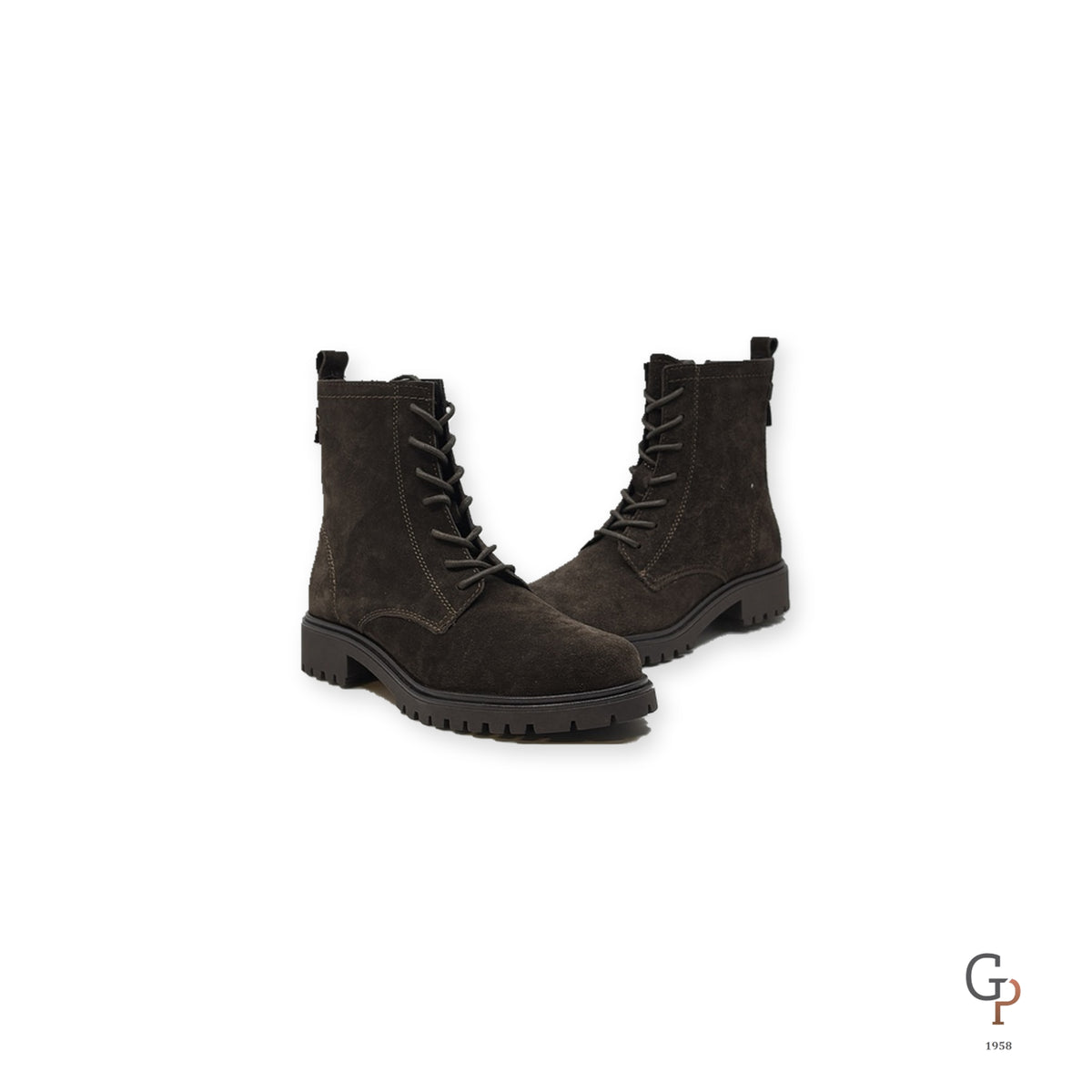
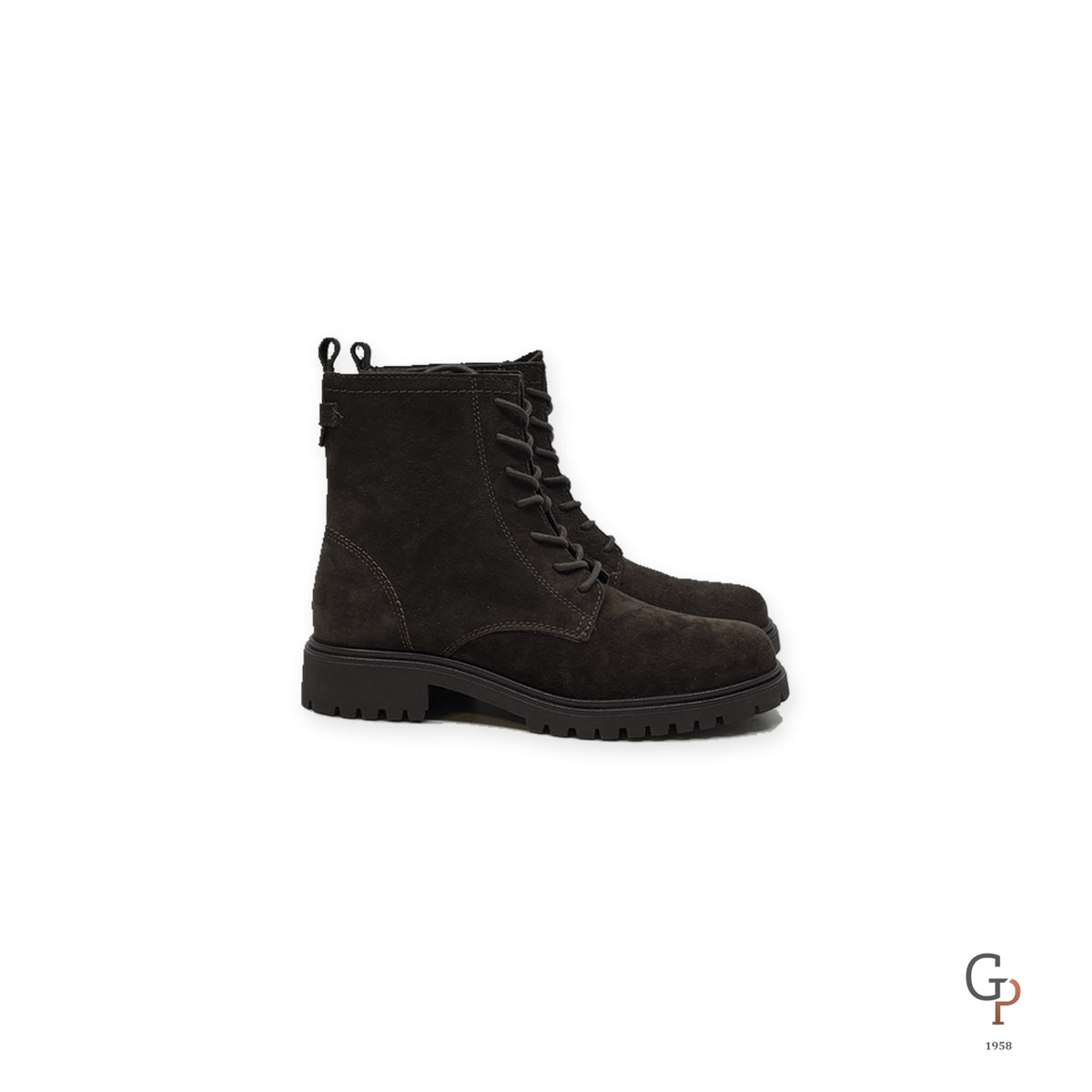
A semi-serious guide for anyone who has already bought a size 38 convinced they are a size 38, only to discover that mathematics, in the world of footwear, is merely an opinion.
There is a moment, during every online shoe purchase, when everything seems to be going perfectly. After hours of meticulous searching to relax during the evening, you have found the model you were looking for, the color is just right, the price won't make you regret your life choices, and you have already imagined at least three outfits to wear it with.
Then comes it: the moment of the size.
Because if there is one thing I have learned by observing the wonderful and sometimes incomprehensible universe of footwear, it is that the number we wear is not necessarily the number we should buy. A 38 can be a 38, a generous 37, a 38 that feels like a 39, or a mysterious number that defies all laws of geometry.
In short, buying shoes online requires confidence, optimism, and preferably some more information than simply "I usually wear a 38".
Let's see how to prevent our next purchase from turning into a long-distance relationship with a pair of shoes that will never fit us properly despite various attempts to adapt to each other.
1. First of all: let's know these feet
Before relying on luck, the famous mantra "it has always worked out for me so far" or the size purchased last time, it would be appropriate to take measurements.
To do this, you need very few things:
A sheet of paper
A pencil or a pen
A ruler or a tape measure
A wall
Five minutes of patience
The procedure is quite simple: we place the sheet on the floor, preferably on a hard surface and not on a rug that could distort the measurement. We place the heel against the wall and rest the foot on the sheet, keeping the body weight distributed normally.
We mark the point corresponding to the tip of the longest toe (attention: it is not necessarily the big toe, life is full of surprises) and measure the distance between the heel and the mark just drawn.
We repeat the operation with the other foot.
Because yes, our feet also have their own personality and it is not at all rare that one is slightly longer than the other. To choose the size, we will therefore refer to the larger measurement.
Another little tip: it is better to take the measurement in the afternoon or towards evening, when the foot can be slightly more voluminous than in the early morning.
And if we are looking for a pair of shoes to wear with socks, let's remember to measure the foot while wearing them: we wouldn't want a terry sock to ruin all our calculations.
2. The number is not a religion: every brand has its own rules
Here we enter rather delicate territory: we are used to thinking that the size is a universal fact, so if I wear a 38, I will always buy a 38. Well, not exactly.
Footwear can show even rather significant differences from one brand to another. The shapes used to make them change, the proportions, the widths, and even the way a certain numbering is interpreted. Once you have obtained the measurement of the foot in centimeters, let's compare it with the chart.
![]()

3. Not all shoes are made for all feet (and it is not a personal issue)
We come to another fundamental point: the shape of the shoe.
We can perfectly know the length of our foot, but this does not mean that every model of the same size will fit us the same way.
A pointed-toe pump, for example, will have a different fit than a rounded sneaker. A structured loafer may feel more enveloping on the sides, while an open sandal will have completely different requirements.
And then there is the question of width.
A particularly wide foot could be perfectly comfortable in a generously fitting sneaker, but encounter some difficulty in a narrow-toe shoe. Similarly, someone with a pronounced instep might feel greater pressure in some closed models.
The advice? Always read the product description and pay attention to the fit indications. If it is specified that a model runs small, large, or particularly narrow, let's not ignore the information just because we have already decided that shoe will be ours.
Falling in love is beautiful, but it should not compromise circulation.
4. Leather, suede, fabric: the material also has its say
Another element we often underestimate is the material.
Shoes are not all the same and do not react in the same way when worn.
A natural leather upper, for example, can gradually adapt to the shape of the foot with use, while stiffer or more structured materials tend to maintain their shape more.
Fabric sneakers can offer a greater sense of flexibility, while a shoe with rigid inserts, special stitching, or reinforcements could result in a more restrictive fit.
This does not mean we should buy a shoe that is too tight, trusting in a miraculous future transformation (the famous "it will change by standing with me" has never worked): one thing is a material that settles slightly, another is hoping that a wrong size will spontaneously decide to cooperate with our feet.
5. Indecision between two sizes: now what?
The question of questions.
We have measured the foot, consulted the chart, read the description, and we are still there, in front of the screen, with two sizes in the cart and the index suspended over the purchase button.
If the measurement is between two sizes, there is no answer that works for all models.
We need to consider the shape of the shoe, its structure, the material, and the manufacturer's specific indications. A narrow-toe shoe might require a different evaluation than a soft and wide-fitting sneaker. The presence of a buckle, laces, or adjustable straps can also affect the overall fit.
Our suggestion is not to automatically choose the larger or smaller size: it is better to evaluate the model as a whole and, in case of doubt, ask for information: we are here for this and you can do it by writing to us directly on WhatsApp at the number 376-1527223 or at the email address info@gianfrancopini.it.
Five minutes of comparison can save us a return procedure and some inevitable moments of disappointment.
6. When the package arrives, let's not celebrate right away
Finally, the courier has rung. The package has arrived, the box is in our hands, and we are ready to inaugurate the new purchase.
Not so fast.
Before throwing away packaging, labels, and everything that could serve us in case of return, let's try the shoes calmly: let's wear them both, preferably on a clean surface, and take a few steps to see how they behave.
The foot must be stable, the toes must have enough space to move, and we should not feel uncomfortable pressure on the sides or on the top. Let's also check the heel: if it continuously slips out of the shoe, there could be a fit problem.
And above all, let's remember that a new shoe can have a different feeling compared to the one we are used to, but it should not cause pain. If something is not convincing, let's check the return conditions and times before using the product further.
In conclusion: buying shoes online is beautiful, doing it without making mistakes is even better
Being able to choose between models, colors, and collections comfortably from home is one of the most beautiful things about contemporary shopping, but if there is one lesson to take home, it is this: the number we usually wear is an excellent starting point, not an absolute certainty.
Measuring the foot, consulting the charts, knowing the characteristics of the different models, and paying attention to the materials are small considerations that can make a big difference.
Finding the right shoe is already complicated enough, we don't need the size to put sticks in our wheels too.